West Loop's Median Condo Price Is Three Markets Wearing One Number
October 1, 2026
October 1, 2026
A two-bedroom condo four blocks from Google's Chicago office and a two-bedroom condo four blocks toward Ashland Avenue can carry the same square footage, the same finish level, and a price gap wide enough to buy a car. Both listings will say "West Loop." Neither price reflects the neighborhood. Both reflect a much narrower fact: how many minutes the front door sits from a specific cluster of employers and restaurants, whether the building was a meatpacking warehouse or a 2019 pour, and whether the parking spot came with a deed or a monthly lease.
The neighborhood's median sale price has run in the high $400,000s to low $500,000s across 2026 readings, well above Chicago's citywide figure of roughly $411,500 in August 2026. That gap is real and worth knowing. But treating it as a single number to shop against is where buyers get it wrong. West Loop isn't pricing a neighborhood. It's pricing three separate variables that happen to share a zip code.
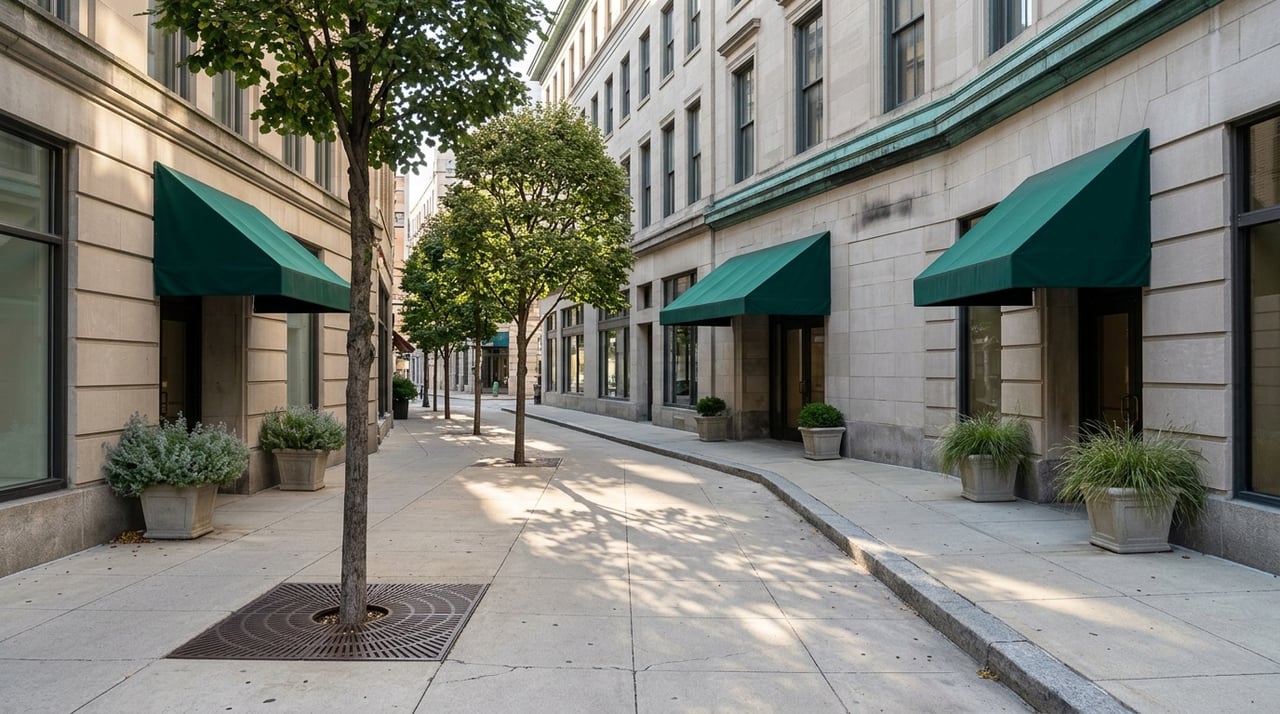
Fulton Market is the part of West Loop that put the neighborhood on national radar, and it prices like its own submarket because it functions like one. Google's Midwest headquarters and McDonald's global headquarters sit inside its boundaries, and Restaurant Row along Randolph Street runs through it too, anchored by Girl & the Goat, Roister, and Avec. A spring 2026 snapshot of active Fulton Market listings put the median list price at $699,000, against a broader West Loop median sitting closer to $500,000 across the same stretch of the year.
That's not a luxury tier stacked on top of a normal market. It's a walking-distance premium. A unit inside the fifteen-minute radius of Fulton Market's office towers and dining strip is competing against a buyer pool willing to pay for commute time and reservation access. A unit on the residential blocks south of Madison, quieter and closer to Skinner West Elementary and Mary Bartelme Park, is competing against a buyer pool pricing in square footage and a slower pace instead. Same neighborhood name, different auction.
Bedroom count is the first thing buyers use to compare listings, and it's the least reliable one in West Loop. Here's roughly what that comparison has looked like across 2026 listings, depending on where and what you're buying:
| Unit Type | Typical Range (2026) | What's Driving the Range |
|---|---|---|
| One-bedroom, entry-level | Upper $300,000s to mid $400,000s | Distance from Fulton Market corridor, older mechanicals |
| Two-bedroom, standard building | $650,000 to $1 million | Proximity to Randolph Street, amenity level, HOA reserves |
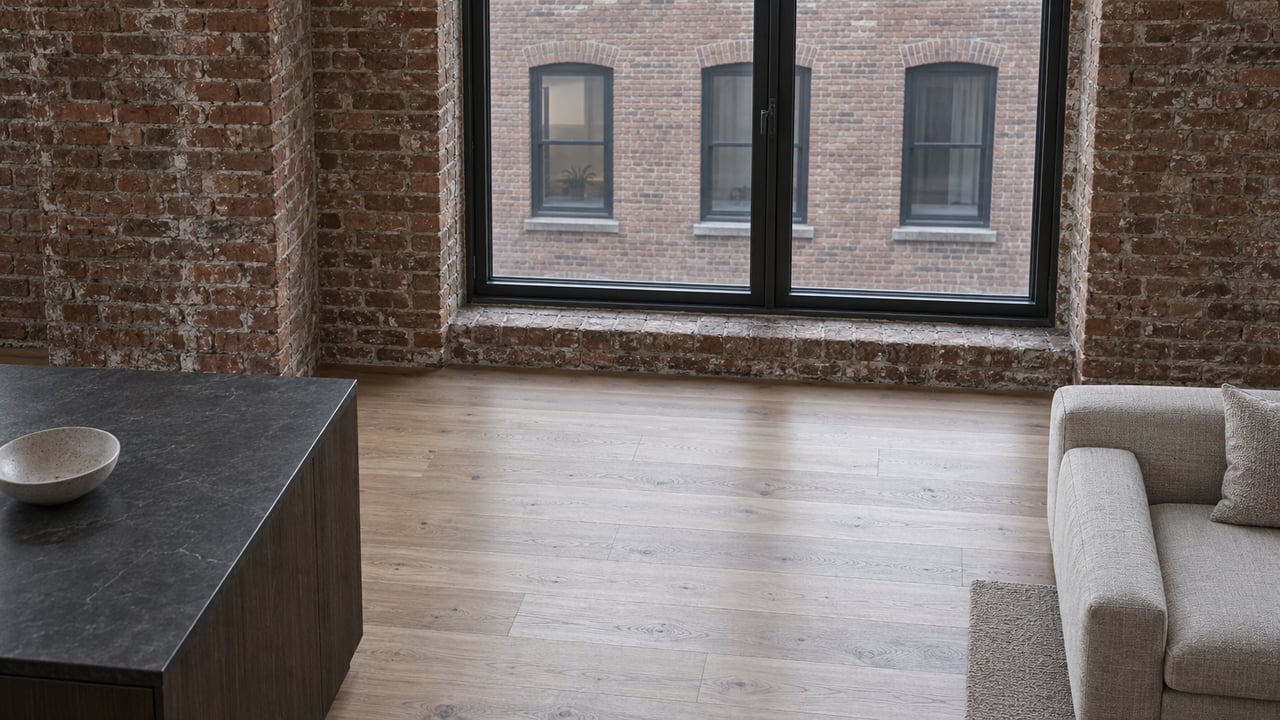
| True loft (timber, exposed brick) | $500,000 to $1.5 million | Authentic conversion stock is shrinking, priced for character |
| Penthouse / new luxury tower | Above $4 million, with recent record listings well past $7 million | New construction (Fulton Bond, The Embry) resetting the ceiling |
The spread inside a single bedroom count is the tell. A "two-bedroom in West Loop" spans roughly half a million dollars before anyone has toured a unit, and the variable doing most of that work isn't the floor plan. It's which of the three markets that listing actually belongs to.
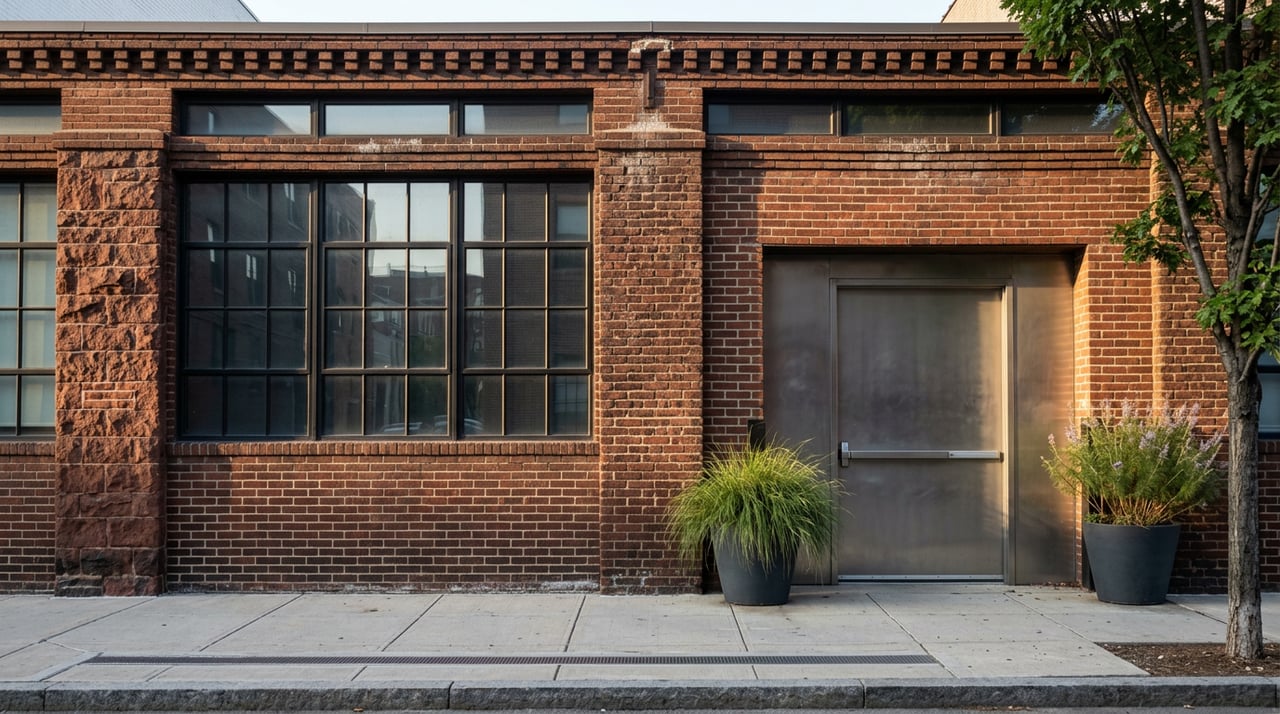
Buyers tend to treat loft-versus-new-construction as a taste question. It's actually a pricing mechanism, because the two product types draw different buyer pools and resell on different timelines. A true loft conversion, the kind with original timber beams and exposed brick from the neighborhood's warehouse era, is increasingly rare stock and commands a premium for that scarcity alone. A newer full-amenity building offers predictable systems, doorman service, and a larger resale pool, which is its own kind of value even at a similar price point.
The mismatch happens when a buyer compares a loft's price per square foot against a new tower's and assumes one is overpriced. They're not selling to the same buyer. Monthly assessments in full-amenity buildings typically run $500 to $1,200, a cost that doesn't show up on the sale price at all but changes the real monthly number by hundreds of dollars depending on which building a buyer picks.
Street parking in West Loop is tight enough that most buildings offer deeded spaces instead, and a deeded spot typically adds $25,000 to $50,000 to a unit's value on its own. That number rarely shows up in the way listings get compared. Two identical units, one with a deeded space and one without, can differ by tens of thousands of dollars for reasons that have nothing to do with the unit itself. A buyer comparing "price per square foot" across two West Loop listings without checking whether parking is included is comparing two different products under one label, the same mistake as comparing a loft to a new tower without accounting for the buyer pool each one draws.
New luxury supply is pulling the top of the market further from the median, which is part of why the spread inside "West Loop" keeps widening rather than settling. The Embry at 19 N May Street currently holds the price record west of the Kennedy Expressway, with a penthouse sale at $7.6 million. Sulo Development is building toward beating that record with Fulton Bond at 1325 W Fulton Street, a two-tower project designed by KPF and ParkFowler Plus totaling roughly 149 units, with pricing starting around $1.5 million and penthouses aiming past $7.6 million. The sales center opened in late February 2026.
Smaller projects are moving too. A five-story, 16-unit building at 1282 W Washington has zoning approval for a 32-vehicle garage and private balconies, with pricing set between $1.7 million and $4 million and delivery projected for 2027. None of this is flooding the market. Downtown Chicago delivered just 243 new units in 2025, and new construction starts fell to a decade-low of 1,395 units citywide, with adaptive reuse projects expected to make up nearly 45 percent of downtown deliveries over the next two years. Fewer new buildings means each one that does arrive has outsized pricing power, which is exactly what's happening at the top of West Loop's range.
If you're weighing West Loop against another downtown Chicago neighborhood, the median price is a starting point, not an answer. The number that actually matters is which of the three West Loop markets you're shopping in: the Fulton Market proximity tier, the loft-versus-new-construction tier, or the parking-and-assessment line items that sit underneath both. A listing priced at the neighborhood median could be a fair deal on a quiet block south of Madison or an underpriced outlier a block from Randolph Street, and the only way to tell the difference is to price the block, not the zip code.
That's the comparison worth running before an offer goes in, building by building rather than against a citywide average that was never describing your unit in the first place.
If you're comparing West Loop against another downtown Chicago building or weighing a specific address against the neighborhood's wider range, Hudson Parker can walk through what a given block, building type, and parking situation actually mean for your price before you write an offer.
Stay up to date on the latest real estate trends.

Looking to purchase or sell a home? Curious about current market valuations, or simply interested in exploring your real estate options? Contact us today and experience the Hudson Parker difference.

2251 N Geneva Ter Chicago, IL 60614