Loft Vs Tower Living In The West Loop
June 25, 2026
June 25, 2026
Trying to choose between a West Loop loft and a newer tower condo? You are not alone. In this part of Chicago, the decision often comes down to how you want your home to feel day to day, how much building complexity you are comfortable with, and what kind of association you are buying into. If you want a clearer way to compare the two, this guide will walk you through the tradeoffs that matter most. Let’s dive in.
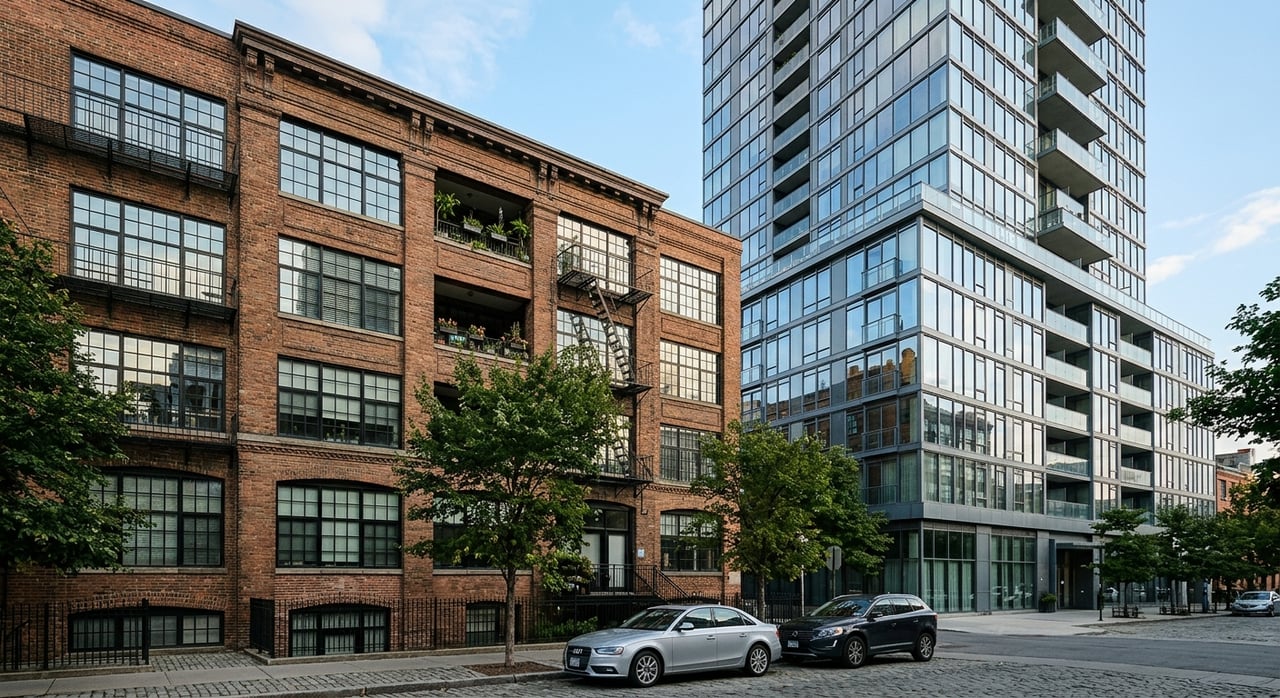
West Loop has a built-in split personality in the best way. The neighborhood grew from industrial, warehouse, and meat-packing roots into a walkable area close to downtown and the riverfront, so today you will find both reused industrial buildings and modern residential towers.
That history shapes your housing choices. In practical terms, you are usually comparing industrial conversions with older bones against newer condo buildings with more uniform layouts and amenity packages. Both can be appealing, but they solve different priorities.
A true loft usually leads with space and character. Historic Chicago lofts often feature ceilings around 10 to 14 feet, large windows, and visible structural elements. In West Loop, that can mean exposed brick, heavy timber ceilings, and oversized industrial windows.
That combination creates a home that can feel dramatic and open. Even when the square footage is similar, a loft may feel larger because of the ceiling height and the proportions of the space. If you care about texture, originality, and a less standardized layout, loft living often stands out.
Newer tower condos in West Loop often offer a more polished and predictable experience. Buildings such as Illume, Noir, and Madison+Carpenter emphasize features like floor-to-ceiling windows, modern finishes, private elevator access in some cases, and doorman service in some buildings.
These homes may trade some of the raw scale and industrial personality of a loft for cleaner lines and newer systems. If you prefer a move-in-ready look, more consistency from unit to unit, and a more contemporary finish level, tower living may feel like the easier fit.
This is the core decision for many buyers. Lofts often deliver more visual character and a stronger sense of individuality, while towers usually offer a more consistent and current interior finish.
Neither is automatically better. It depends on whether you value a home that feels one-of-a-kind or one that feels streamlined and turnkey. In West Loop, buyers often care deeply about ceiling height, natural light, renovation quality, and how well the building is run, so the answer is rarely just about style alone.
It is easy to assume towers always win on light and views, but that is not a hard rule. In West Loop, orientation, floor level, and neighboring buildings can matter just as much as whether you are in a loft or a high-rise.
That means the specific unit stack deserves close attention. A great loft with oversized windows and open exposure may feel brighter than a tower unit facing a tighter view corridor. A higher-floor condo may offer broader views, but the best outcome depends on the exact placement of the home within the building.
Many buyers ask whether lofts or towers are quieter. In most cases, the better question is which unit is quieter. Floor height, window quality, corridor placement, and nearby restaurant or transit activity often matter more than the category itself.
West Loop is generally described as a walkable neighborhood near downtown and the riverfront, but street activity still varies by block. Lower floors near busy corridors may pick up more noise, while higher floors and stronger glazing may soften it. Privacy can work the same way, especially in buildings with close neighboring structures or shared outdoor areas.
It is tempting to think lofts always have lower monthly assessments or that towers always cost more to carry. That is not automatic. Assessments can vary based on staffing, amenities, parking, building age, and how well the association is funding reserves.
Under Illinois condo law, boards must prepare an annual budget and provide reasonable reserves for capital expenditures and deferred maintenance. Reserve planning is supposed to consider structural and mechanical components, building surfaces, energy systems, replacement costs, reserve studies, the financial impact on owners, and financing ability.
That matters because the monthly number alone does not tell the full story. A lower assessment can look attractive, but if reserve funding is weak, future owners may face larger costs later.
A smart West Loop comparison looks beyond finishes. Older loft buildings often concentrate more of the risk in the envelope and original structure. Newer towers may shift more of the long-term burden to elevators, façade systems, central mechanicals, garage equipment, and amenity spaces.
That does not mean one option is safer than the other. It means each building type tends to carry a different maintenance profile. When you buy, you are not just buying the unit. You are also buying into the shared obligations of the association.
Association review is one of the most important parts of buying a West Loop condo, whether it is a loft or a tower. Illinois guidance explains that common elements can include roofs, hallways, stairways, parking areas, electrical wiring, and central heating and air. It also notes that balconies, terraces, patios, and parking spaces are usually limited common elements.
That is why you want clarity on what the association maintains and what may fall partly on owners. This can affect your costs, responsibilities, and even your future resale position.
West Loop has been behaving like a tighter and more style-sensitive downtown submarket. Recent Redfin snapshots show West Loop with a median sale price of $499,000 over the last three months, 43 days on market, and $421 per square foot.
In the same recent snapshot, River North posted a median sale price of $427,000, 71 days on market, and $403 per square foot. River North tends to offer a larger and more tower-heavy inventory mix, while West Loop buyers often focus closely on building quality, design details, and unit-level features.
Chicago’s broader market also remained inventory-constrained in January 2026, with citywide supply at 1.7 months. In a market like that, building-level differences can matter as much as neighborhood averages.
A loft may suit you best if you want ceiling height, industrial character, and a home that feels less standardized. It can be a strong fit if you enjoy architectural texture and do not mind that older buildings may require more careful association review.
A tower may suit you best if you want modern finishes, a more predictable layout, and features like newer systems or service-oriented amenities in certain buildings. It can be a strong fit if convenience and a cleaner, more contemporary feel are high on your list.
The best choice usually comes down to this: buy the building, then buy the unit. In West Loop, the strongest long-term decision is often the one that balances your lifestyle preferences with solid association fundamentals and a well-positioned home inside the building.
If you want help comparing a specific loft building against a newer tower, building-level research can make the decision much clearer. For buyer guidance grounded in downtown condo detail, private inventory insight, and a practical view of association health, contact Hudson Parker.
Stay up to date on the latest real estate trends.





Looking to purchase or sell a home? Curious about current market valuations, or simply interested in exploring your real estate options? Contact us today and experience the Hudson Parker difference.

2251 N Geneva Ter Chicago, IL 60614