Trying to make sense of River North condo inventory? You are not alone. The way listings, sales, and building dynamics interact can feel complicated when you are trying to price, buy, or time a move. In this guide, you will learn the simple metrics that matter, how to read them for River North, and how building-level factors like amenities and HOA health shape your leverage. Let’s dive in.
Key metrics: MOI and absorption
Understanding inventory starts with a few clear definitions.
- Active inventory: the number of River North condos currently listed for sale.
- Period sales: the number of condos that sold during a chosen window, often the last 12 months.
- Months of inventory (MOI): how many months it would take to sell today’s active listings at the recent sales pace.
- Absorption rate: the share of active inventory that sells each month.
The simple formulas
- MOI = Active Inventory ÷ Average Monthly Sales
- If you use last 12 months of sales: MOI = Active Inventory ÷ (Sales_last12 ÷ 12)
- Absorption rate (monthly) = (Average Monthly Sales ÷ Active Inventory) × 100%
An illustrative example
- Suppose 180 active listings and 360 sales in the last 12 months.
- Average monthly sales = 360 ÷ 12 = 30.
- MOI = 180 ÷ 30 = 6 months. Absorption = 30 ÷ 180 = 16.7% per month.
How to read MOI
- 0–3 months: stronger seller’s conditions. Faster sales and fewer price cuts for well-priced homes.
- 4–6 months: balanced. Pricing must be sharp. Negotiation is common.
- More than 6 months: buyer-favored. Longer days on market and more room for concessions.
Local context matters. Price band, building quality, seasonality, and mortgage rates can shift outcomes even when MOI looks similar on paper.
How to pull River North numbers
To get a clean, local read, focus on reliable sources and consistent windows.
Step-by-step approach
- Define the River North boundary you will use in your MLS search and keep it consistent across pulls.
- Pull current active condo listings (property type = condo/co-op where relevant).
- Pull closed sales for the last 1, 3, 6, and 12 months. Include sale price and days on market.
- Segment by price bands (for example: under $350k, $350k–$599k, $600k–$999k, $1M+) and by bedrooms (0–1BR, 2BR, 3BR+).
- Note pending sales if you want a current pulse, but use closed sales for your core calculations.
- Calculate MOI and absorption for the whole neighborhood and each price band.
- Review days on market and sale-to-list price ratio to confirm what MOI implies about negotiation.
Pro tips: de-duplicate any duplicate MLS entries, compare your totals with local association reports for reasonableness, and compare the same month year over year to control for seasonality.
What MOI means for your strategy
MOI helps you set expectations for pricing, time on market, and negotiation.
If you are selling
- Low MOI (under about 3): price at or just under the most recent comps and prepare for strong early interest. Homes that match current demand move quickly.
- Balanced MOI (4–6): present a sharp list price and premium marketing. Be ready to negotiate on price or small credits.
- High MOI (more than 6): lead with value. Consider staging, early price alignment, and proactive disclosure of HOA docs to reduce buyer friction.
If you are buying
- Low MOI: have a strong pre-approval and be ready for competition. Consider escalation clauses and clean terms if the home is well-priced.
- Balanced MOI: negotiate with recent comps in hand. Ask for needed repairs or reasonable credits.
- High MOI: push for price, inspection, and appraisal protections. You may have leverage for closing-cost credits.
Price bands and unit types
River North is diverse, and overall MOI can hide different stories by price and size.
- Studios and 1-bedrooms often see faster absorption than upper-tier penthouses.
- Two-bedroom inventory varies by building amenities and parking.
- Three-bedrooms and larger can carry longer MOI, especially above key price thresholds.
Always calculate MOI within your price band and bedroom count for the most actionable read.
Building-level turnover and HOA health
Neighborhood averages are helpful, but building dynamics often drive real outcomes.
Amenity tiers you will see
- Luxury high-rises: full-service buildings with doorman, concierge, pool, and fitness. These can support higher price per square foot but often have higher HOA dues.
- Mid-tier high-rises: focused amenities like a fitness room and package room. Value depends on efficiency and dues.
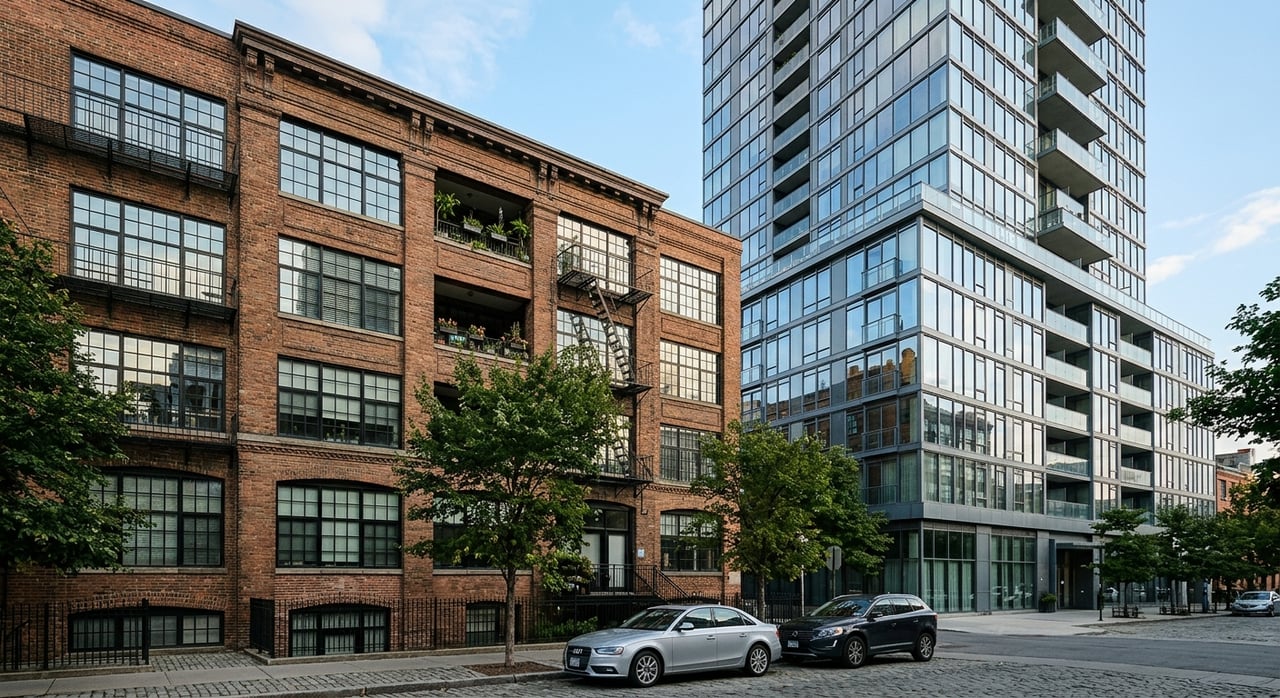
- Boutique loft conversions and low-rise condos: fewer amenities with unit-level character. Market time can be sensitive to unique finishes and layout.
- Newer developments: modern finishes and sometimes higher initial HOA per square foot. Resale pace later depends on HOA strength and governance.
HOA profile: red flags and opportunities
- Reserve funding and assessment history: underfunded reserves or recent large assessments can slow demand and lengthen MOI.
- Monthly dues level and structure: dues far above comparable buildings can narrow the buyer pool.
- Rental policy and investor mix: investor concentration and short-term rental rules can change valuation and turnover dynamics.
- Management and litigation: ongoing litigation or deferred maintenance can increase MOI and negotiation pressure.
Turnover rate: what it is and how to use it
- Turnover (annual) = Closed sales in the building over 12 months ÷ Total units.
- Example: 6 sales in a 120-unit building equals 5% turnover.
- High turnover compared to nearby peers can signal investor activity or changing owner mix. Low turnover can indicate stable ownership or a smaller buyer pool for that building’s specific product.
Applying building data to decisions
- Sellers: use turnover and HOA health to position your list price, disclosures, and marketing focus. Parking, storage, and amenity quality can offset higher dues if priced correctly.
- Buyers: weigh dues, reserves, and rules alongside the condo’s features. Building risk can justify price negotiations even when the broader market is tight.
Reading DOM and sale-to-list alongside MOI
MOI sets the backdrop, while days on market and the sale-to-list price ratio show how pricing and negotiation are actually playing out.
- Rising DOM with stable MOI can signal mispricing or a shift in buyer expectations.
- A lower median sale-to-list ratio points to greater buyer leverage.
- Track both by price band and building to confirm your strategy.
When inventory looks high but demand is healthy
Headline MOI can look elevated for reasons that do not reflect real buyer demand.
- A cluster of similar resales from a recent development can inflate active counts.
- Seasonality can pause decision-making even as buyers plan for spring.
- Mortgage rate moves can slow contracts temporarily while pre-approvals catch up.
Check absorption trends and price-band MOI before drawing conclusions.
A practical checklist for your condo decision
- Confirm a consistent River North boundary for your analysis.
- Pull active listings and closed sales for 1, 3, 6, and 12 months.
- Calculate MOI and monthly absorption for the neighborhood, your price band, and your bedroom count.
- Review DOM and sale-to-list ratios to gauge negotiation pressure.
- For target buildings, note unit count, recent sales, turnover rate, active listings, dues, parking, and any visible assessments or litigation.
- Watch for seasonality and new-construction resales that can skew active counts.
How Hudson Parker helps
You get building-level guidance, clear pricing strategy, and premium presentation tailored to River North. Our senior-broker model focuses on the exact buildings and price bands you care about, combining data-backed pricing with staging, professional photography, and curated showings. We also maintain private and off-market options for clients who value discretion.
If you are selling or buying in select River North buildings in 2025, ask about our targeted reduced-fee program at 1.25% on eligible buy or sell sides. Ready for a precise, building-specific plan that aligns price, timing, and negotiation? Connect with Hudson Parker to Request a Building-Specific Market Plan.
FAQs
What is months of inventory for River North condos and why it matters?
- MOI estimates how long it would take to sell today’s active River North listings at the recent sales pace, which helps you set price, timeline, and negotiation expectations.
How do I calculate absorption rate for my River North price band?
- Divide average monthly sales in your price band by current active listings in that band, then multiply by 100 to get a monthly percentage.
What does a balanced market look like for River North condos?
- A balanced market usually falls around 4–6 months of inventory, where pricing needs to be competitive and negotiation on price or credits is common.
How do HOA dues and reserves impact my River North condo sale?
- Higher dues or underfunded reserves can narrow the buyer pool and increase time on market, while strong reserves and clear capital plans support pricing confidence.
Should I use closed or pending sales to measure River North inventory health?
- Use closed sales for core calculations to avoid double counting and to keep consistency; pending sales can add a current pulse but need caution.
How does seasonality affect River North condo absorption?
- Spring and early summer often see stronger absorption, so compare year-over-year by the same month and use rolling 3-, 6-, and 12-month views for context.