Two-Flat And Small-Unit Investing In Roscoe Village
April 23, 2026
April 23, 2026
If you are looking at two-flats and small multifamily properties in Roscoe Village, you are probably balancing two goals at once: finding a property that works financially today and one that holds value well over time. That is exactly what makes this pocket of Chicago so interesting. Roscoe Village offers older housing stock, a meaningful renter base, and limited small-unit supply, all of which can create opportunity if you buy with a clear plan. Let’s dive in.
Roscoe Village sits within Chicago’s North Center community area, and the housing mix helps explain why small-unit investing remains relevant here. According to CMAP’s North Center profile, the area has 35,408 residents and 14,666 households, with 56.1% owner-occupancy and 43.9% renter-occupancy.
That renter share matters if you are evaluating a two-flat or a small building. It suggests steady demand for leased units, while the ownership rate points to a neighborhood where many buyers also value long-term stability and property upkeep.
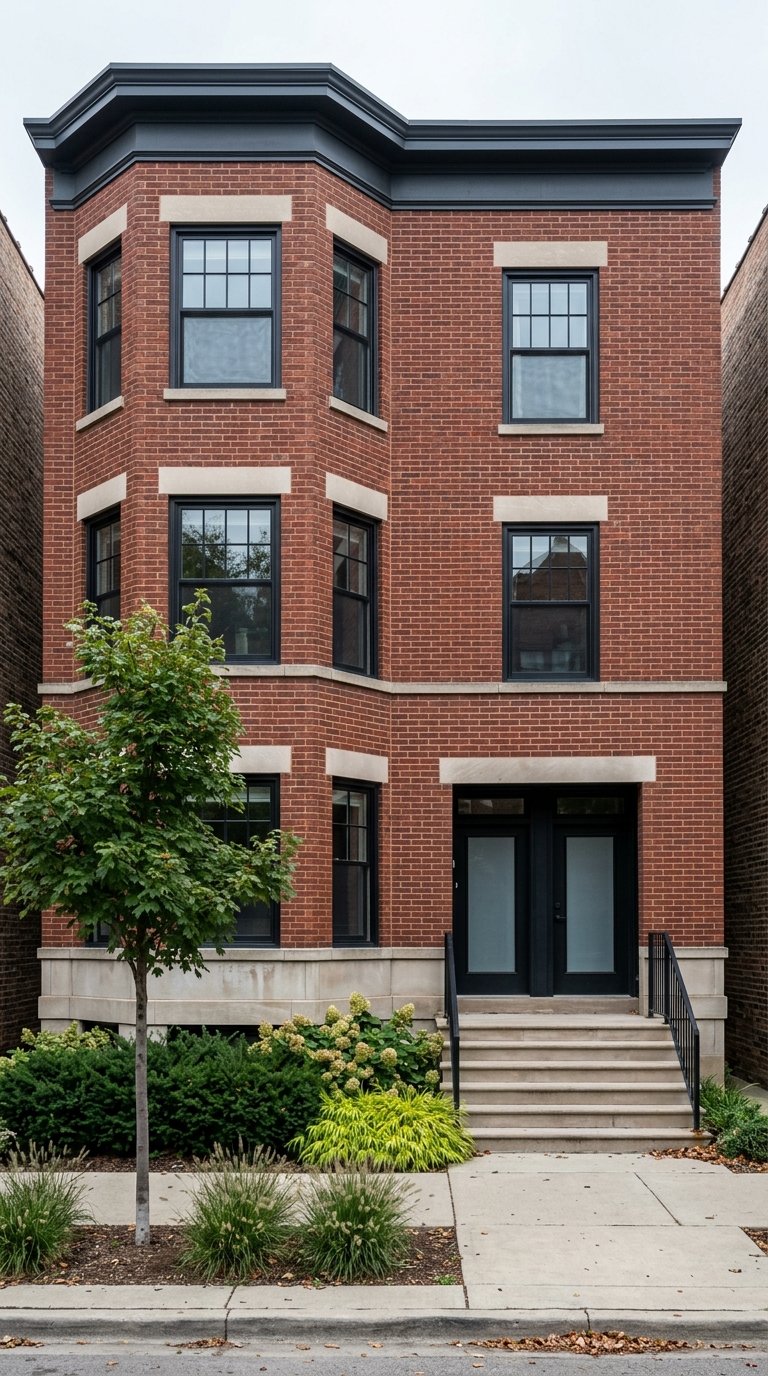
The age of the housing stock is another major factor. CMAP reports that 51.3% of housing units were built before 1940, while 17.6% of the stock is in 2-unit structures and 24.5% is in 3-to-4-unit buildings. In plain terms, Roscoe Village still has the kind of vintage inventory that often attracts both owner-occupants and long-term investors.
One of the biggest stories in Roscoe Village is not just demand. It is shrinking supply.
The Institute for Housing Studies found that Chicago has been losing 2-to-4-unit buildings across many neighborhood types, with especially steep losses on the North and Northwest sides. In North Center, 15.1% of all Chicago 2-to-4-unit buildings lost to single-family conversions between 2013 and 2019 came from this one community area.
CMAP’s time-series data shows the same pattern. The share of housing in 2-unit structures fell from 24.9% in 2009-2013 to 17.6% in 2019-2023, while detached single-family homes increased from 23.6% to 27.7%. For you as a buyer, that likely means true two-flats are becoming more scarce, and scarcity can support pricing for well-located properties that remain in multifamily use.
Roscoe Village is not the kind of market where you usually chase the highest immediate cap rate. It is better understood as a location where limited small-unit inventory, stable demand, and long-term neighborhood appeal may support wealth building over time.
That can be especially appealing if you are considering one of two common strategies:
In either case, the property-specific details matter more here than broad market averages. Purchase price, current rent roll, layout, condition, and zoning can all shift the math quickly.
Roscoe Village zoning is one reason two seemingly similar buildings can have very different potential. Roscoe Village Neighbors notes that most residential streets allow detached single-family, two-flat, three-flat, and multifamily housing patterns, with RS-3 common across the neighborhood.
Chicago’s zoning code adds an important distinction. RS districts are primarily intended for detached houses, while RT districts are designed to accommodate detached homes, two-flats, townhouses, and low-density multi-unit buildings. The city’s allowed-use table shows that two-flats are permitted in RS3, RT3.5, RT4, and higher-density residential districts.
For you, the key takeaway is simple: do not assume every parcel offers the same path forward. A property on an interior block may present different options than a corner lot or a site near a commercial corridor. If you are buying for flexibility, parcel-level review is essential.
Current rental data gives useful context for underwriting. The latest Realtor.com Roscoe Village market snapshot shows a median rent of $2,795 with 32 active rentals.
That headline number is helpful, but the range matters even more. Current examples on the same page include 3-bedroom rentals at $2,995, $3,650, and $3,800, along with 2-bedroom rentals at $2,900 and $3,800. That suggests renovated units, larger floor plans, or more polished finishes may command a meaningful premium over the neighborhood median.
If you are evaluating a value-add property, this is where disciplined underwriting matters. It is one thing to see higher asking rents online. It is another to determine what a specific layout, finish level, and location can realistically support.
A pending listing at 2318 W Addison St helps illustrate the numbers. The property was listed at $850,000 and shows in-place rents of $1,500 and $1,900, for a total of $3,400 per month or $40,800 annually before vacancy and expenses.
That example highlights an issue many buyers run into in Roscoe Village. Existing rents may not fully reflect what a renovated or better-positioned property could earn, but bridging that gap usually requires capital, time, and a realistic plan.
It also shows why owner-occupant buyers often compete for these assets. A two-flat can offer housing utility now and income support at the same time, which makes the buyer pool broader than in a pure investment market.
Small multifamily pricing in Roscoe Village is not uniform. It can vary sharply based on building size, condition, and use mix.
For example, 2111 W Roscoe St is listed at $1,099,000 for a multifamily property with two duplexes and a one-bedroom unit. On the higher end, 1953 W Roscoe St is listed at $1,849,000 for a renovated six-unit mixed-use building.
Those listings do not create a neighborhood average by themselves, but they do reinforce an important point. In Roscoe Village, small-unit investing is highly asset-specific. You are not just buying unit count. You are buying condition, layout, location, and the amount of work already completed.
Because so much of the local housing stock predates 1940, renovation planning is a major part of the investment conversation. According to Sweeten’s Chicago renovation cost guide, a full-home renovation typically runs $120 to $150 per square foot.
Using that range, a 2,000-square-foot two-flat could imply about $240,000 to $300,000 before contingency. A 2,400-square-foot building could run about $288,000 to $360,000 before contingency.
The same guide shows kitchen remodels ranging from about $27,300 to $145,000+ and bathroom remodels from about $16,500 to $37,500+. It also notes that permit costs may add roughly $1,500 to $3,700, and recommends a 10% to 15% contingency.
For a vintage Roscoe Village building, that contingency is not optional in practice. Older properties can carry hidden mechanical, structural, or code-related issues that are not obvious during a first walk-through.
If you are seriously shopping this neighborhood, it helps to evaluate each property through a simple framework.
Look at current leases, actual collected rent, and how much of that income is stable versus below-market. A building with low in-place rents may offer upside, but only if the renovation cost and timing make sense.
Before you assume you can expand, add units, or substantially rework the building, confirm the zoning and permitted uses. Roscoe Village parcel-by-parcel differences can materially affect your options.
With more than half of the housing stock built before 1940, your renovation budget should include real contingency. Cosmetic assumptions alone can make a deal look better on paper than it will be in reality.
Online asking rents provide a useful starting point, but your target rent should match the building’s actual unit size, finish level, and location. Premium rents generally need premium product.
Roscoe Village often makes more sense for buyers focused on long-term appreciation, stable demand, or owner-occupied investing than for buyers chasing short-term yield alone. Your buy box should reflect that from the start.
The neighborhood’s demographic profile supports ongoing demand for well-located small-unit housing. CMAP reports that 26.8% of residents are under age 20, including 9.4% under age 5 and 17.4% ages 5 to 19. Roscoe Village Neighbors also lists local schools serving the neighborhood, which is one reason many buyers and renters continue to consider this area closely.
That does not mean every building is automatically a strong investment. It does mean Roscoe Village has characteristics that can support resilient demand, especially for well-maintained properties with practical layouts and updated finishes.
Two-flat and small-unit investing in Roscoe Village can work well if you approach it with realistic expectations. This is a market where scarcity, location, and property quality often matter more than headline yield.
If you are considering a purchase, your best edge is a disciplined review of rent potential, zoning, renovation scope, and long-term resale appeal. When the numbers and the property line up, Roscoe Village can offer a compelling mix of income support and long-term value. If you want local, data-driven guidance as you evaluate Chicago investment and residential opportunities, Hudson Parker can help you think through the details with a practical, property-specific approach.
Stay up to date on the latest real estate trends.
Looking to purchase or sell a home? Curious about current market valuations, or simply interested in exploring your real estate options? Contact us today and experience the Hudson Parker difference.

2251 N Geneva Ter Chicago, IL 60614